
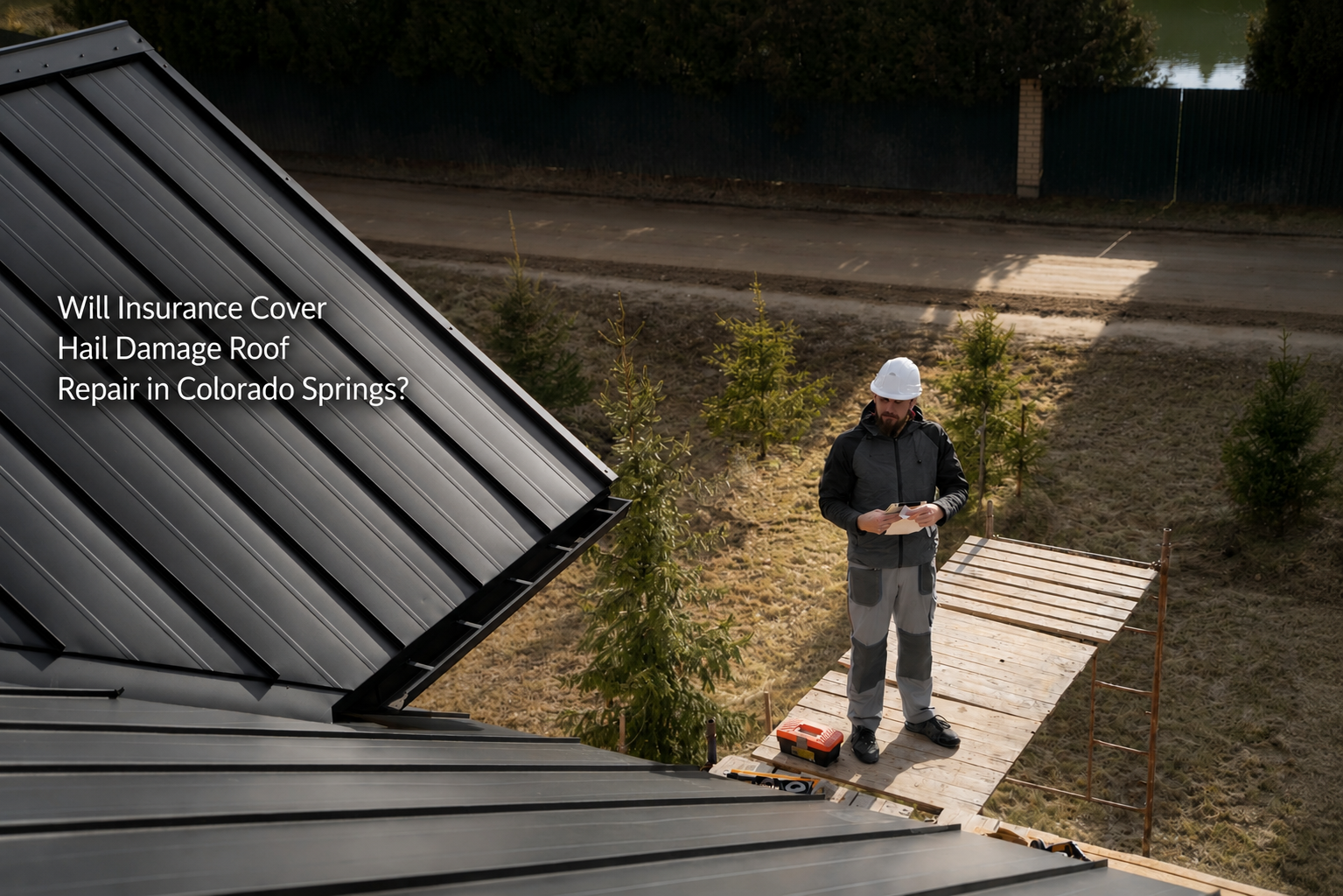
Will Insurance Cover Hail Damage Roof Repair in Colorado Springs?
Most homeowners’ insurance policies do cover hail damage, but getting the roof paid for is not always that simple. Your deductible, roof age, policy details, and the adjuster’s report can all affect what the insurer approves. That gap between “covered” and “fully paid” is where many Colorado Springs homeowners run into trouble.
Colorado Springs gets enough hail that roof claims are a regular part of homeownership here. Still, settlements can miss bruised shingles, damaged vents, gutters, flashing, or other storm-related issues. A reliable roofing contractor in Colorado Springs, CO, can inspect the roof, document the damage, and help you understand what should be included before the claim moves too far along.
What Most Homeowners’ Policies Actually Cover
Hail is classified as a weather event, which means it typically falls under the dwelling coverage portion of a standard homeowners policy. That coverage is designed to pay for the cost of repairing or replacing damaged parts of your home’s structure, including the roof.
Most policies in Colorado are written on a Replacement Cost Value (RCV) basis, which means the insurer pays the full cost to replace damaged materials with new ones of a similar kind and quality. Some older policies or policies with specific endorsements use Actual Cash Value (ACV) instead, which subtracts depreciation based on the age of your roof before issuing payment.
If your policy is RCV-based, your insurer will typically issue an initial payment at the ACV amount and then release the remaining depreciation holdback after your contractor completes the repairs and submits documentation.
What Can Reduce or Deny Your Hail Damage Claim
Even with solid coverage in place, several factors can affect the outcome of your claim. Understanding them before you file gives you a better starting position.
Policy deductibles are the first factor. Many Colorado policies carry a separate wind and hail deductible, which is often calculated as a percentage of your home’s insured value rather than a flat dollar amount. A one percent deductible on a $400,000 home means $4,000 comes out of pocket before coverage applies.
Pre-existing damage is another factor insurers cite to reduce payouts. If your roof had wear or prior damage before the storm, the adjuster may attribute some findings to that pre-existing condition rather than the storm event. Thorough documentation taken shortly after the storm is the strongest counter to this argument.
Inspection quality also plays a significant role. Insurance company adjusters often work through large backlogs of claims after a major storm event. A rushed inspection can miss granule loss, subtle structural movement, compromised flashing, and other damage types that are not visible at a glance. Items that are missed during the initial inspection are items that do not get paid.
What Insurance Adjusters Commonly Miss
Colorado Springs hailstorms affect more than just the visible surface of a roof. Several categories of damage are routinely undercounted in insurance adjuster inspections, and each one represents money that homeowners leave on the table.
Granule loss is the most common. Hail knocks the protective granule coating off asphalt shingles, accelerating weathering and shortening the lifespan of the roof significantly. It is not always visible from the ground, and it is frequently omitted from initial estimates.
Wind uplift damage is another. Shingles may look intact from the street, while the adhesive seal between tabs has been broken by wind pressure. Once that seal is gone, the roof is vulnerable to water intrusion even if no shingles are physically missing.
Compromised flashing around chimneys, skylights, and wall intersections is a third category that gets skipped regularly. Dented or displaced flashing is a direct path for water to enter the home, and it belongs on a complete storm damage claim.
Gutters, window seals, and siding panels are also affected in most hail events. We cover those surfaces in more detail below.
Why Having a Licensed Adjuster on Your Side Changes the Outcome
There is a meaningful difference between a roofing contractor who walks your insurer’s adjuster around the roof and a contractor that employs licensed insurance adjusters on staff. At The Rich Co Inc, we have licensed adjusters in-house. That is not a referral arrangement or a partnership with an outside firm. It is a credential our team holds directly.
What our licensed adjusters do is conduct an independent inspection before you file, document every item of damage in a formal written report, and negotiate directly with your insurance company on your behalf. When the insurer’s estimate comes back lower than the actual scope of work, we compare it line by line against the Xactimate estimate we have already prepared and file a supplement for the difference.
For homeowners in Colorado Springs who have already received an unfavorable finding, that process starts with a free inspection. If our adjuster finds damage the initial inspection missed, we help you reopen or supplement the claim from a position of documented evidence.
The Surfaces Insurance Should Cover Beyond the Roof
A hailstorm does not stop at the ridge line. A complete storm damage claim covers every surface the event affected, and limiting your claim to the roof alone can mean leaving real money uncollected.
Gutters take direct hail impact and frequently show denting, seam separation, and detachment from the fascia. They belong on the claim. Window seals crack under the thermal stress and impact of large hail, leading to fogging between panes and compromised insulation. They belong on the claim. Siding panels, particularly vinyl and aluminum, show impact marks that qualify as covered damage. Exterior paint can also be affected by hail and debris impact.
Our team handles roofing, gutters, windows, siding, and exterior paint under one contract and one insurance claim process. Homeowners dealing with multi-surface storm damage do not need to coordinate separate contractors or manage separate claim lines on their own.
How to Start Your Hail Damage Claim the Right Way
The sequence in which you handle the steps after a storm affects how the claim plays out. Most homeowners call their insurer first. We recommend calling a licensed contractor first.
Having an independent damage report in hand before the insurance company sends their adjuster gives you documentation that was created without the insurer’s influence. That report sets the baseline for what should be on the claim. If the insurer’s adjuster comes back with a lower number or misses items, you have a counter-assessment already prepared.
Frequently Asked Questions
Q: Does homeowners’ insurance cover hail damage to the roof in Colorado?
A: In most cases, yes. Standard homeowners’ policies in Colorado include dwelling coverage that applies to hail damage. The actual payout depends on your policy type (RCV vs ACV), your deductible, and the quality of the damage inspection.
Q: What is the difference between RCV and ACV on a roof insurance claim?
A: RCV (Replacement Cost Value) pays the full cost to replace the damaged roof with new materials of similar quality. ACV (Actual Cash Value) subtracts depreciation based on the roof’s age. RCV policies typically issue an initial ACV payment and release the remaining depreciation holdback after repairs are completed.
Q: What if my insurance company says I have no hail damage?
A: That finding can be challenged. Insurance adjusters working a high volume of claims after a major storm frequently miss granule loss, compromised flashing, and wind uplift damage. A licensed re-inspection from our team costs nothing and is the first step toward reopening or supplementing the claim.
Q: Will filing a hail damage claim raise my insurance rates?
A: Weather-related claims are generally treated differently from at-fault claims. Rate impacts depend on your specific insurer, policy type, and claims history. We recommend discussing this directly with your agent before filing.
Q: How long do I have to file a hail damage claim in Colorado?
A: Policy terms vary, but most Colorado homeowners’ policies require claims to be reported within one to two years of the damage event. Filing sooner is better because storm documentation is stronger when it is recent.
Q: Do you handle hail damage to gutters, windows, and siding as well as the roof?
A: Yes. We handle the full exterior scope under one contract, including roofing, gutters, windows, siding, and exterior paint. Storm events typically affect multiple surfaces, and we document and claim all of them together.
Q: Is the inspection really free with no obligation?
A: Yes. There is no cost and no obligation. This includes homeowners who have already received an unfavorable finding from their insurer.
Contact Us
Your home deserves quality work done right the first time. At The Rich Co Inc, we’re here to help with everything from roofing and gutters to windows, siding, and interior upgrades every step of the way.
Visit Us: 8735 Mossy Bank Ln, Colorado Springs, CO 80927, United States Phone: +1 (719) 287-5385 Website: https://therichcoinc.com/
Prefer to start online? Fill out our contact form, and we’ll get back to you promptly. https://therichcoinc.com/contact/
Related Topics:
- What Adjusters Miss in Roof Claims
- Choose a Hail Damage Roofing Contractor