
Hail Damage Roof Replacement Costs in Colorado Springs
Every homeowner staring at hail damage wants the same thing first: a number. What is this actually going to cost? The honest answer is that it depends on more variables than most people expect, and honestly, a lot of those variables have as much to do with your insurance policy as they do with the roof itself.
Rather than guess at a figure that won’t apply to every situation, it helps to understand the actual factors that move the cost up or down, along with how insurance coverage fits into the picture.
That’s part of why it pays to work with a professional roofing contractor in Colorado Springs who can walk you through both sides of it, the roof and the paperwork, before you’re stuck guessing.
Why There’s No Single Answer to What Hail Damage Costs
Two roofs that look similarly damaged from the street can end up with very different repair scopes once someone actually gets up there and inspects them closely. It’s kind of surprising how much that changes things.
The size of the roof, the pitch, the type of decking underneath, and how many layers of shingles are already on there, all of it factors into what a residential roof repair or full replacement actually involves.
On top of that, every insurance policy is different, and that part trips people up more than the roof itself sometimes. Coverage limits, deductibles, and how a policy handles depreciation all change what a homeowner ends up paying out of pocket versus what the insurer covers.
That’s why a free inspection matters so much before anyone tries to put a number on a project, since the real cost drivers only become clear once the roof has actually been examined.
Factor One: The Extent and Type of Damage
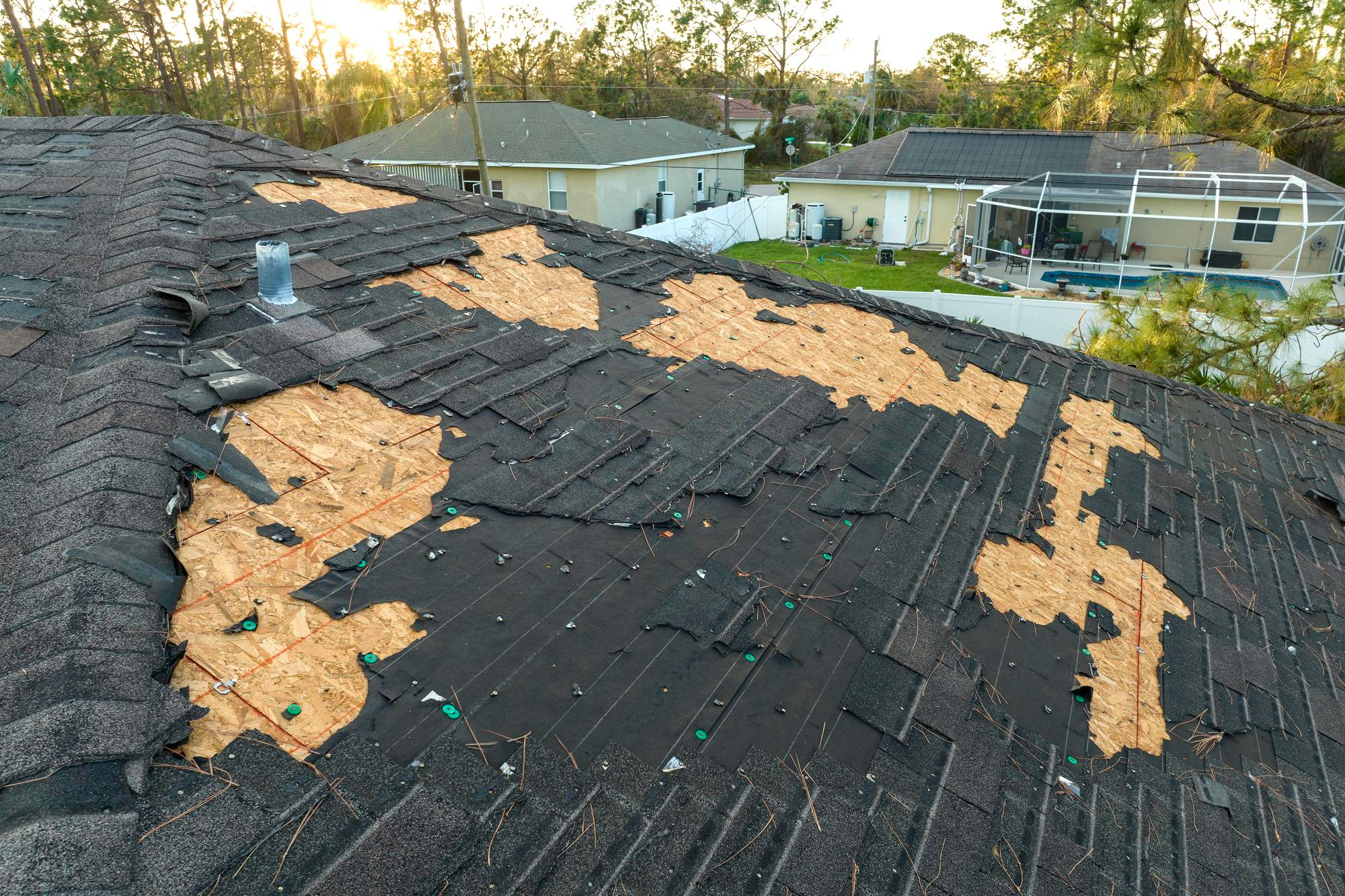
Not all hail damage requires a full replacement, and that’s honestly good news for a lot of homeowners. Some roofs only need targeted repairs to the section that took the worst of the impact, while others have damage spread widely enough that patching individual spots just doesn’t make sense compared to replacing the whole roof at once.
Granule loss across a large portion of the roof, multiple areas of bruised or cracked shingles, and damage to flashing or vents, these are the kinds of things that push a project toward full replacement rather than a smaller repair. Knowing what to expect going in makes the process a bit less stressful.
The type of damage matters too. Wind damage that lifted or tore shingles is a different repair scope than hail impact that bruised shingles without tearing them, even though both can come from the same storm. A trained inspection is really what determines which category a given roof actually falls into.
Factor Two: Materials and Roofing System
What the roof is made of has a direct effect on both repair cost and how long the finished roof will last afterward.
Standard asphalt shingle systems are the most common in the Colorado Springs area, and they come in a range of quality tiers that affect both material cost and how well the roof stands up to the next hail event. It’s one of those decisions that seems minor until a storm rolls through again.
Impact-resistant shingle options exist specifically for hail-prone regions like this one, and while they typically cost more upfront, some insurance policies offer premium discounts for installing them, which can offset part of that difference over time.
This is worth discussing during an inspection rather than deciding on materials beforehand. It’s also part of why choosing the right contractor matters just as much as choosing the right materials.
Factor Three: What Insurance Actually Covers
Insurance terminology plays a bigger role in the final cost than most homeowners expect going in, honestly more than the roof itself sometimes. Replacement Cost Value, usually shortened to RCV, is what it costs to replace the damaged roof today with a comparable new one. Actual Cash Value, or ACV, is that same figure minus depreciation for the roof’s age and existing wear.
The gap between those two numbers is called the depreciation holdback, and many policies release that holdback once the work is actually completed and documented. That means a homeowner may see a second payment after the project wraps up rather than all of it upfront, which catches people off guard more than you’d think.
Understanding which of these applies to a specific policy and how the insurer is calculating each figure is often where the biggest cost surprises either get caught early or are missed entirely.
Noticed hail damage on your roof after a recent storm? Give us a call at (719) 287-5385, and we’ll come take a look before it turns into a bigger repair bill.
Factor Four: Additional Exterior Damage That Adds to Scope
Hail rarely limits itself to just the roof. Gutters get dented, siding gets cracked, and windows sometimes take a direct hit in the same storm that damaged the shingles. When a claim only accounts for the roof and misses everything else, the homeowner ends up covering those additional repairs out of pocket, even though they came from the exact same event.
A full inspection that covers the entire exterior, not just the roof, is what catches this before the claim gets filed rather than after. Folding all of the storm-related damage into a single documented claim tends to produce a more accurate overall picture of what the insurer should actually be covering. It’s a small step that saves a lot of back and forth later.
How a Free Inspection Helps You Understand Your Actual Cost
We offer a free inspection precisely because cost estimates without an actual look at the roof are little more than guesses, and honestly, guessing isn’t helpful to anyone.
Our team walks the property, documents the roof along with gutters, windows, siding, and paint, and explains what an insurance claim would likely cover based on what we find. It’s a straightforward process, but it makes a real difference down the line.
Because we have licensed adjusters on staff, that inspection also translates directly into the language your insurer will need to see. Rather than getting a generic repair quote and a separate insurance conversation that may or may not line up, homeowners across Colorado Springs and El Paso County get one process that connects the actual damage to what the claim should pay for. That’s kind of the whole point of doing it this way.
Have questions about your roof, or just want a second opinion before filing a claim? Contact us, and we’ll help you figure out the right next step. You can also reach us at (719) 287-5385 or 2trc.llc@gmail.com. We’re here Monday through Thursday, 7:00 AM to 6:00 PM, and Friday, 7:00 AM to 3:30 PM.
Related Topics: