
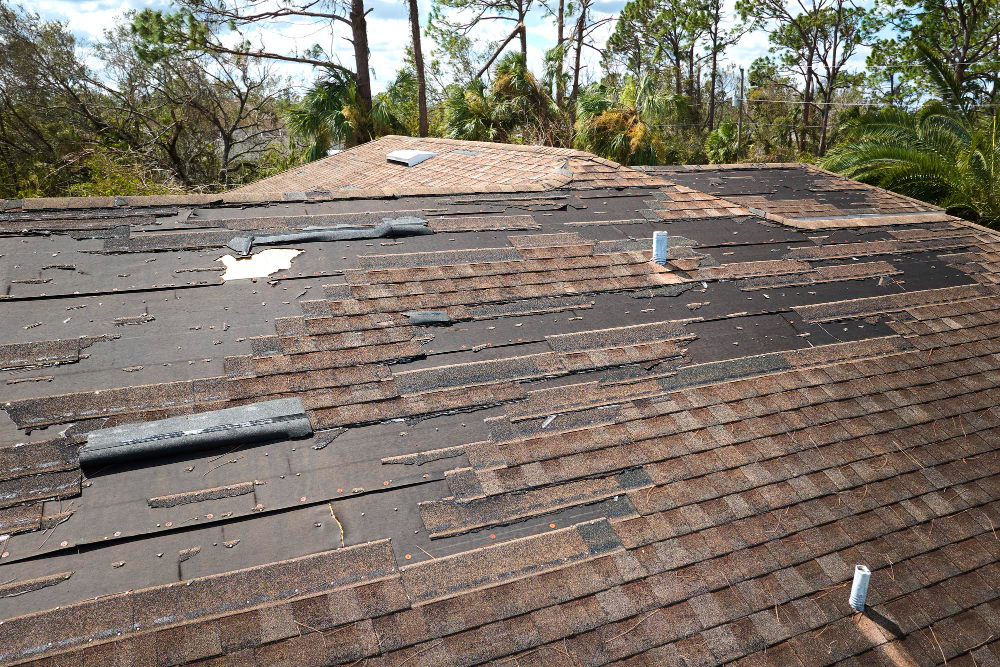
Secondary Damage from Untreated Hail Impacts in Colorado Springs (Mold, Rot, Insulation Issues)
The expensive part of a hailstorm is rarely the shingle. It is the rafter tail that rotted through two winters later, or the attic insulation that has been holding water since August. We are The Rich Co Inc, a trusted roofing service provider in Colorado Springs, CO with licensed insurance adjusters on staff, and this is the progression we watch develop on roofs across El Paso County every season.
Our adjusters document the original impact alongside whatever has grown out of it, because a carrier needs to see that the hail caused both. That distinction, drawn early, tends to separate a claim that covers the whole scope from one that only pays for what is visible on top.
How a Hail Impact Turns into Structural Rot
Hail does not need to punch a hole in a roof to start rot. A split seal or a cracked tab lets a modest amount of water reach the decking. Wood that stays damp for long stretches softens and loses strength.
Colorado Springs, CO makes that worse than most climates would. The swing between a sunny afternoon and a cold night means trapped moisture rarely dries out fully before the next system adds more. Left through a season or two, softened decking stops holding fasteners the way it should. That is how a minor looking repair becomes a deck replacement. It is also why the early inspection matters more than the early estimate.
Where Mold Starts After a Hailstorm
Mold wants moisture, something organic to feed on, and time. A hail damaged roof supplies all three the moment water starts working past the shingle layer. Attic insulation and wood framing both hold damp well, and neither is anywhere a homeowner looks often.
A slow leak that never produces a ceiling stain can feed growth out of sight for months. That is why we check attic access and go through the property’s storm history during an inspection rather than stopping at the roof surface.
Finding it during that review, instead of after a musty smell reaches a bedroom, keeps the remediation smaller and the claim considerably cleaner.
Smelling something musty in an upstairs closet since the hail came through? Give us a call at (719) 287-5385, and we will scan the attic side as well as the shingles.
What Wet Insulation Does to the Whole Roof System
Insulation that absorbs water loses most of its ability to slow heat transfer. It also stays wet far longer than the shingles above it, because attics move so little air. The failure shows up first on a utility bill and in one room that never quite warms up. By the time anyone connects those symptoms to the roof, the insulation has usually been saturated for weeks.
We run thermal imaging for hidden roof damage alongside the physical inspection for exactly this reason, and it is the fastest way to find a wet patch before it spreads. A temperature difference across the roof surface points straight at a soaked area below. Our post on thermal imaging roof inspections explains what the camera picks up and what still has to be confirmed by hand.
Signs the Damage Has Already Moved Past the Shingles
Certain patterns repeat on roofs we inspect a season or two after a storm. Any one of them earns a closer look rather than another year of waiting to see what happens.
- A musty smell in the attic or a top floor closet that arrived after the storm
- Soft or spongy spots underfoot on the deck, especially near valleys and penetrations
- Insulation that has discolored, clumped, or sagged away from the joists
- A ceiling stain that appeared weeks after the hail rather than during it
- Rafters or trusses that look darker or feel damp near the roof line
None of those are proof on their own. Together with a storm on the record, they are enough to justify getting someone up there.
Our guidance on undetected roof leaks after storms covers the entry points that get missed most often on a roof this far into the problem. A single visit is normally enough to confirm whether secondary damage is already underway or whether the roof is simply showing its age.
Why Untreated Hail Damage Costs More the Longer It Sits
A carrier that would have paid for shingle repair owes more once rot or mold appears. The connection between the two gets harder to prove as months pass. The hail event is dated. The rot is not, and an adjuster reviewing a file two years later has every reason to ask which came first.
We review the claim, handle the paperwork, and negotiate with the carrier, which keeps the incident report tied to the storm that caused it. Our team also reads the policy language and explains where the coverage limits sit. That matters most when secondary damage pushes a claim past the first estimate. Filing sooner, with documentation that captures both the impact and what followed, is what keeps a homeowner from absorbing costs the policy was written to cover.
How the Interior Damage Usually Shows Up
Water that gets past a hail damaged surface does not stop politely at the deck. It follows framing members and surfaces as a ceiling stain or a bubble in drywall, often on the far side of the house.
That lag is the reason a roof that passed a quick look right after the storm can still be leaking by the time the next snow melts. Interior symptoms almost always trail the roof damage that caused them by several weeks.
What an Inspection Catches That a Roof Walk Misses
A roof walk on its own can miss damage already sitting under the surface. That is why we pair the physical check with a thermal scan after a hailstorm. The scan flags a temperature pattern suggesting wet insulation or compromised decking, and the crew then opens that section by hand to find the cause. Sometimes it is a cracked shingle. Sometimes it is split flashing or a failed vent boot that nobody would have found by looking.
Whatever turns up feeds straight into the residential roof repair scope. The work ordered matches what is happening under the shingles, not what showed from the yard. That is the whole point of having the same team inspect, document, and repair.
Frequently Asked Questions
Not necessarily, but waiting makes it harder. The storm has a date, but rot and mold don’t, so the link between them is harder to prove as time passes. Many policies also set a deadline for filing, so check yours and get the roof inspected soon.
It depends on your policy, and on whether the damage can be clearly tied to the storm. That’s why we record the original impact and everything that grew out of it together. A file that shows both stands a far better chance than one that only covers what’s visible on the shingles.
We check the attic, go over the property’s storm history and run thermal imaging alongside the physical inspection. The scan points to wet insulation or weakened decking, and the crew then opens that section by hand to confirm the cause. You get a written record of what’s actually happening under the shingles.
Yes. The same team inspects, documents and repairs, so the repair scope matches what was found under the shingles, not just what was shown from the yard.
Rot, mold and soaked insulation cost far more the longer they’re left, and they’re much easier to tie to the storm when they’re caught early. The Rich Co Inc brings licensed adjusters and roofing crews together to find what’s really happening under your roof and document it properly. Call (719) 287-5385 and get it checked now, which costs a great deal less than finding out through the ceiling.
Related Topics: